Semaglutide vs Tirzepatide vs Retatrutide: Comparing GLP-1 Peptides
A research-focused comparison of the three leading GLP-1-based peptides — semaglutide, tirzepatide, and retatrutide — covering mechanisms, clinical data, and key differences.
The GLP-1 receptor agonist class has produced some of the most significant findings in metabolic research over the past decade. Semaglutide, tirzepatide, and retatrutide represent three generations of this research — each with a distinct mechanism and increasingly potent metabolic effects.
Semaglutide — The GLP-1 Mono-Agonist
Semaglutide (developed by Novo Nordisk) is a GLP-1 receptor agonist with approximately 94% homology to native GLP-1. A fatty acid side chain extends its half-life to approximately 7 days, enabling once-weekly dosing.
Mechanism: Activates GLP-1 receptors in the pancreas (insulin release), brain (appetite suppression), and gut (gastric emptying delay).
Clinical outcomes (STEP trials):
- ·~15% average body weight reduction at 68 weeks (2.4 mg/week dose)
- ·Significant cardiovascular risk reduction (SELECT trial, 2023)
- ·Meaningful HbA1c improvement in type 2 diabetes populations
Tirzepatide — The Dual GLP-1/GIP Agonist
Tirzepatide (developed by Eli Lilly) adds GIP receptor agonism to GLP-1 activity. GIP (glucose-dependent insulinotropic polypeptide) works synergistically with GLP-1 to enhance insulin secretion and may reduce GLP-1-related nausea.
Mechanism: Dual agonist at both GLP-1 and GIP receptors.
Clinical outcomes (SURMOUNT trials):
- ·~20–22% average body weight reduction at 72 weeks (highest dose)
- ·Superior weight loss outcomes vs. semaglutide in head-to-head trial (SURMOUNT-5, 2024)
- ·FDA-approved for type 2 diabetes (Mounjaro) and obesity (Zepbound)
Retatrutide — The Triple Agonist
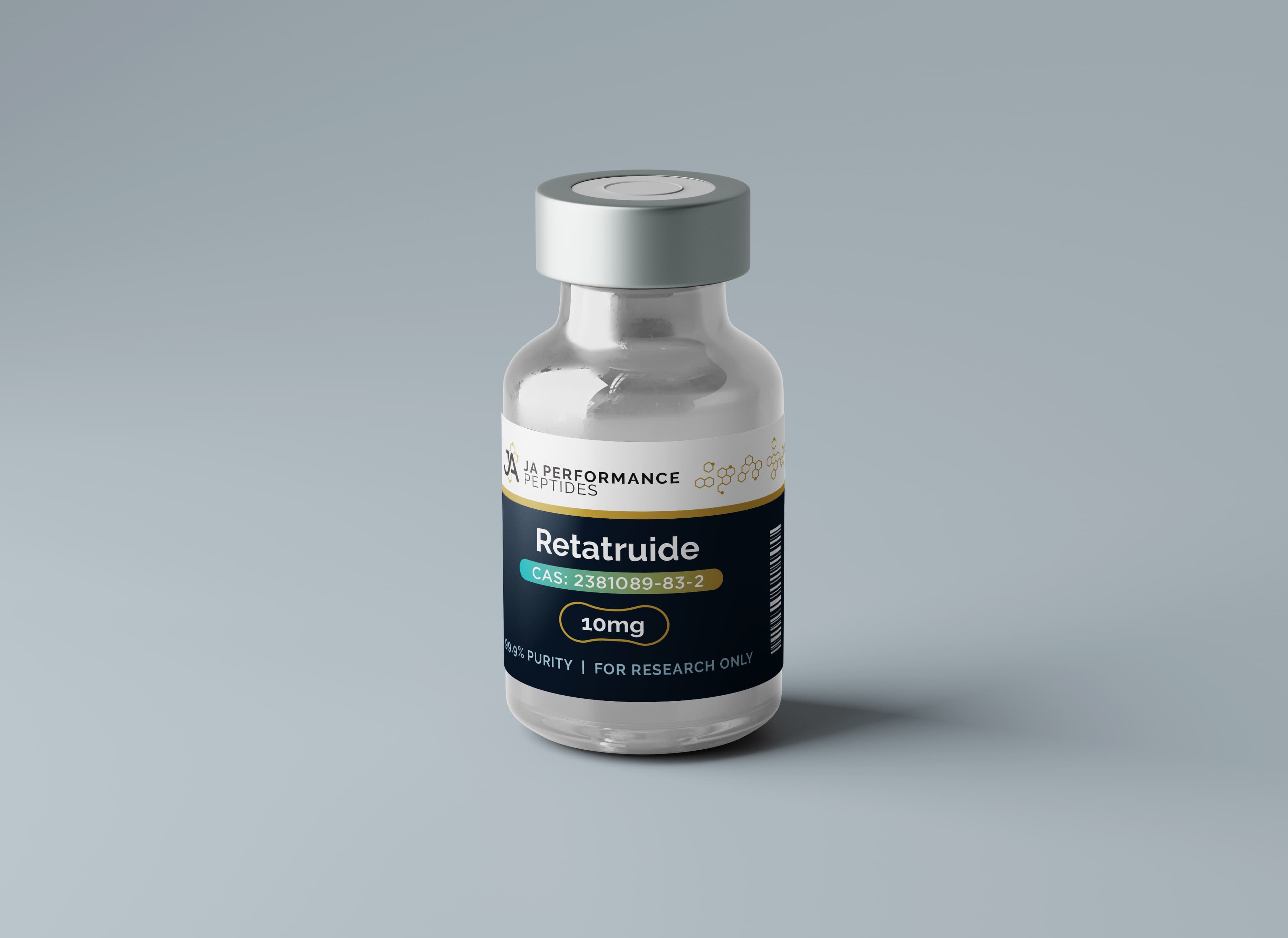
Retatrutide (LY3437943, developed by Eli Lilly) adds glucagon receptor agonism to both GLP-1 and GIP activity. Glucagon drives hepatic fat oxidation and increases energy expenditure.
Mechanism: Triple agonist at GLP-1, GIP, and glucagon receptors.
Clinical outcomes (TRIUMPH Phase 2):
- ·Up to 24.2% body weight reduction at 48 weeks (highest dose cohort)
- ·Currently the highest weight loss figure observed for any pharmacological agent in a clinical trial
- ·Phase 3 trials ongoing as of 2025
Key Comparison
| Peptide | Targets | Peak Weight Loss | Status |
|---|---|---|---|
| Semaglutide | GLP-1 | ~15% | Approved |
| Tirzepatide | GLP-1 + GIP | ~22% | Approved |
| Retatrutide | GLP-1 + GIP + Glucagon | ~24% | Phase 3 trials |
Research Significance
Each generation represents a meaningful advance in understanding how incretin and glucagon pathways interact in metabolic regulation. The triple-agonist approach with retatrutide has opened new questions about the optimal balance between energy intake reduction (GLP-1, GIP) and energy expenditure increase (glucagon).
Storage
All three peptides are temperature-sensitive. Store lyophilized forms as directed and protect from repeated freeze-thaw cycles. See the peptide storage guide for compound-specific storage tables.
Shop Retatrutide or read the Retatrutide deep-dive for a detailed breakdown of its triple-agonist mechanism.
Note: These peptides are sold strictly for research purposes. Not for human use.