MOTS-c vs GHK-Cu: Two Different Approaches to Longevity Research
MOTS-c and GHK-Cu are both studied for anti-aging effects, but they operate through entirely different biology — one from mitochondrial DNA, one from plasma copper chemistry. Here's how researchers compare them.
MOTS-c and GHK-Cu are both found in the longevity peptide conversation, and for good reason — both have significant research backing for age-related biological changes. But their mechanisms are almost completely different, targeting different cellular compartments, different signalling pathways, and different aspects of the aging phenotype.
Origins: Where They Come From
MOTS-c is a 16-amino-acid peptide encoded in the mitochondrial genome — specifically the 12S rRNA gene. It is the only known peptide encoded in mitochondrial DNA and was discovered in 2015. This origin is significant: MOTS-c levels are regulated by mitochondrial function and energy status, meaning they change in response to metabolic demand rather than conventional gene transcription.
GHK-Cu is a copper-binding tripeptide (glycyl-L-histidyl-L-lysine) that occurs naturally in human plasma, saliva, and urine. It was first isolated from plasma albumin in the 1970s by Dr. Loren Pickart. Its activity depends on binding to copper(II) ions — the copper-chelated form (GHK-Cu) is far more biologically active than the free peptide.
Both peptides decline with age: MOTS-c levels drop in older adults and are elevated in centenarians; GHK plasma concentrations fall from ~200 ng/mL at age 20 to ~80 ng/mL by age 60.
Mechanism: How They Work
MOTS-c
MOTS-c's primary mechanism is AMPK activation — it directly stimulates AMP-activated protein kinase, the master cellular energy sensor that governs metabolic homeostasis. Through AMPK and related pathways, MOTS-c:
- ·Mimics exercise: AMPK activation shifts cells toward fat oxidation, glucose uptake, and mitochondrial biogenesis — the same cascade triggered by endurance exercise
- ·Improves insulin sensitivity: Research in obese and aged animal models shows significant improvements in glucose tolerance
- ·Reduces inflammation: MOTS-c attenuates NF-κB signalling and reduces pro-inflammatory cytokine production
- ·Supports longevity: Animal studies have extended lifespan and improved late-life physical performance
- ·Responds to stress: MOTS-c is released from mitochondria in response to metabolic and oxidative stress, functioning as a retrograde signal from mitochondria to the nucleus
GHK-Cu
GHK-Cu operates primarily through gene expression modulation — a broader, less targeted mechanism that produces a wide range of downstream effects:
- ·Modulates 4,000+ genes: Research by Pickart et al. showed GHK-Cu resets gene expression patterns in aged human fibroblasts toward more youthful profiles — upregulating repair and immune genes, downregulating inflammation and cancer-associated genes
- ·Collagen and extracellular matrix: Stimulates synthesis of collagen I, III, and IV; activates collagenase to clear damaged matrix; upregulates glycosaminoglycans and elastin
- ·Antioxidant: Induces superoxide dismutase (SOD) and other antioxidant enzymes; chelates reactive copper ions that could otherwise catalyze oxidative reactions
- ·Wound healing and angiogenesis: Promotes fibroblast proliferation and migration, VEGF expression, and new blood vessel formation
- ·Systemic reach: Has been studied via subcutaneous and topical routes with different absorption and distribution profiles
Key Differences at a Glance
| | MOTS-c | GHK-Cu |
|---|--------|--------|
| Origin | Mitochondrial DNA | Human plasma |
| Primary target | AMPK / energy metabolism | Gene expression / ECM |
| Main effects | Metabolic, insulin sensitivity, exercise mimetic | Collagen, tissue repair, gene remodelling |
| Inflammation | Reduces NF-κB | Reduces via antioxidant/gene effects |
| Aging biomarker | Declines with age, high in centenarians | Declines with age in plasma |
| Research routes | Subcutaneous (primarily) | Subcutaneous + topical |
| Mechanism breadth | Targeted (AMPK central) | Broad (4,000+ genes) |
Are They Complementary?
Yes — the mechanisms are largely non-overlapping, which makes them an interesting combination for longevity research:
- ·MOTS-c addresses metabolic aging — declining mitochondrial function, insulin resistance, inflammatory metabolic state
- ·GHK-Cu addresses structural and genomic aging — declining collagen, extracellular matrix degradation, pro-inflammatory gene expression shifts
A researcher studying multiple dimensions of biological aging would find these compounds address different aspects of the aging phenotype without significant mechanistic redundancy.
Research Protocol Notes
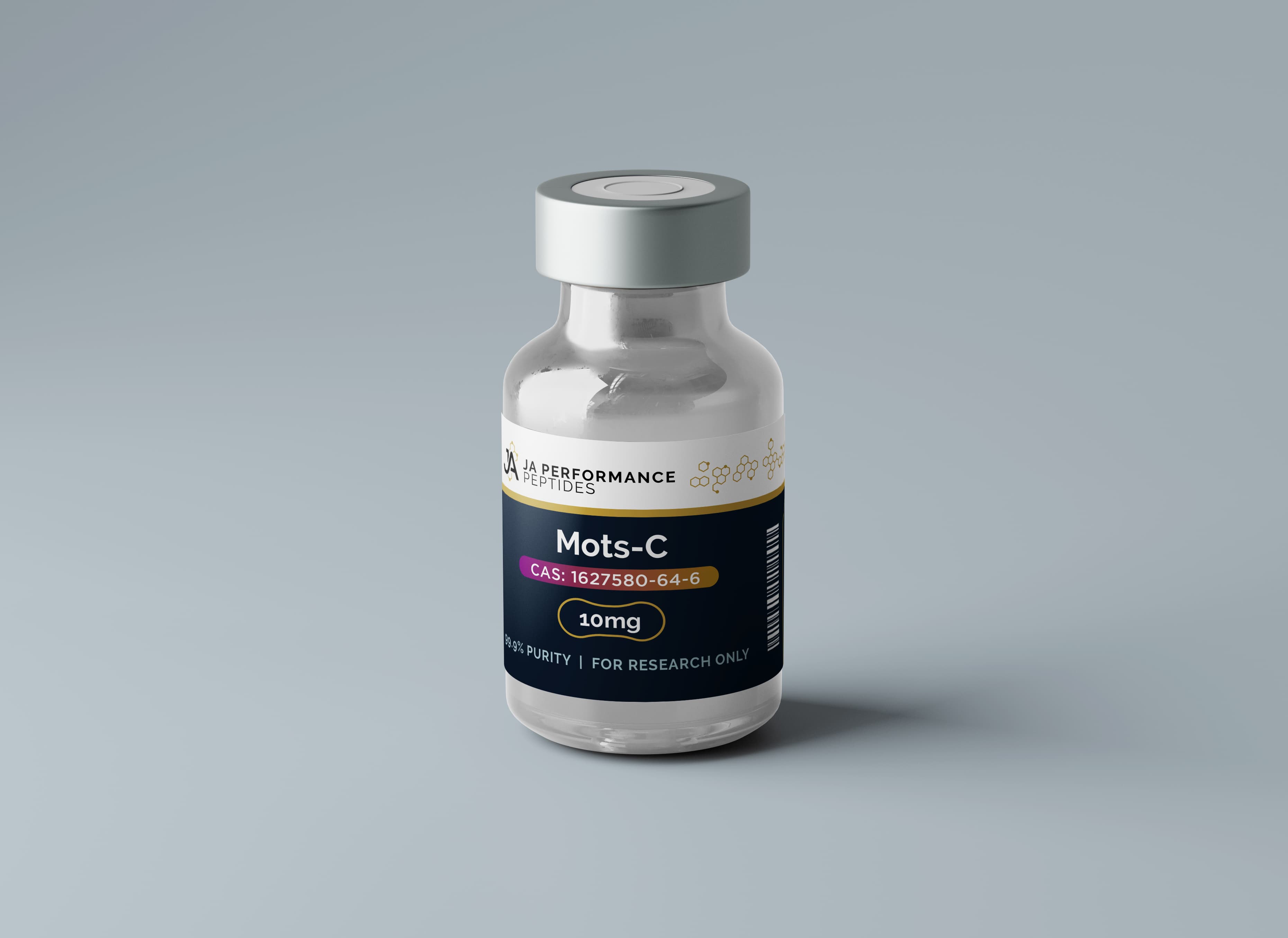
MOTS-c is supplied as a lyophilized powder and is commonly studied via subcutaneous injection. Dosing in animal studies varies; human-equivalent dose extrapolation is an active area of research.
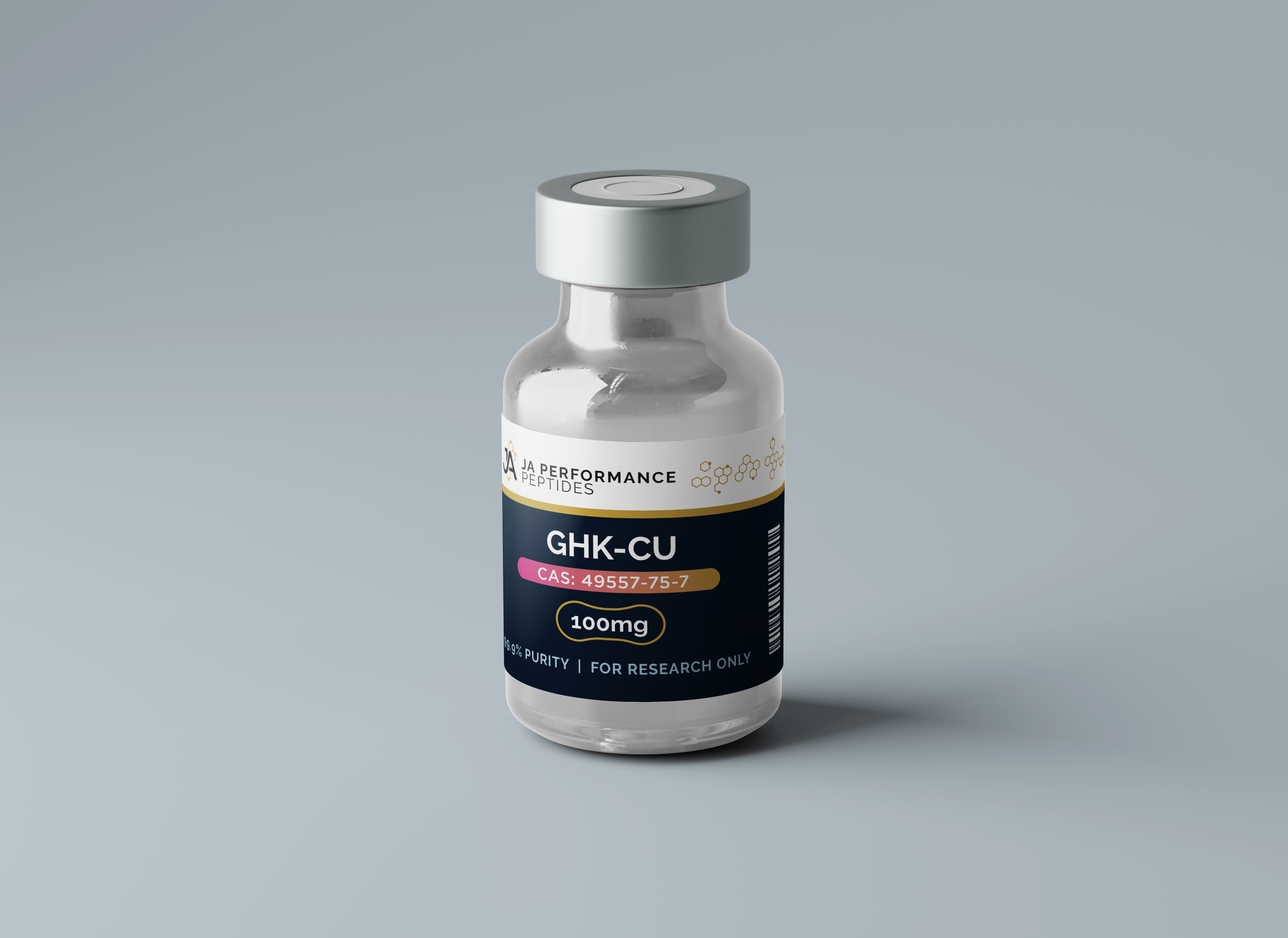
GHK-Cu is available in higher mass quantities (100 mg vials at JA Performance, vs. 10 mg for MOTS-c) because topical research uses larger quantities than subcutaneous protocols. Both routes have been studied.
Both compounds should be stored as lyophilized powder in cool, dark conditions and reconstituted with bacteriostatic water before use. See the reconstitution guide and storage guide.
Available at JA Performance
Both peptides are in stock at 99%+ purity, verified by independent third-party laboratory:
For a broader longevity research context, see the MOTS-c deep-dive and the GHK-Cu science guide. Browse the full longevity peptides collection.
Note: All compounds are sold strictly for in vitro and laboratory research purposes. Not for human consumption.